Shower Drain Smells After Cleaning? When to Hydro Jet
Shower still smells after a drain cleaning? Learn why basic snaking often isn’t enough, when you need hydro jetting, and how to keep odors away for good.
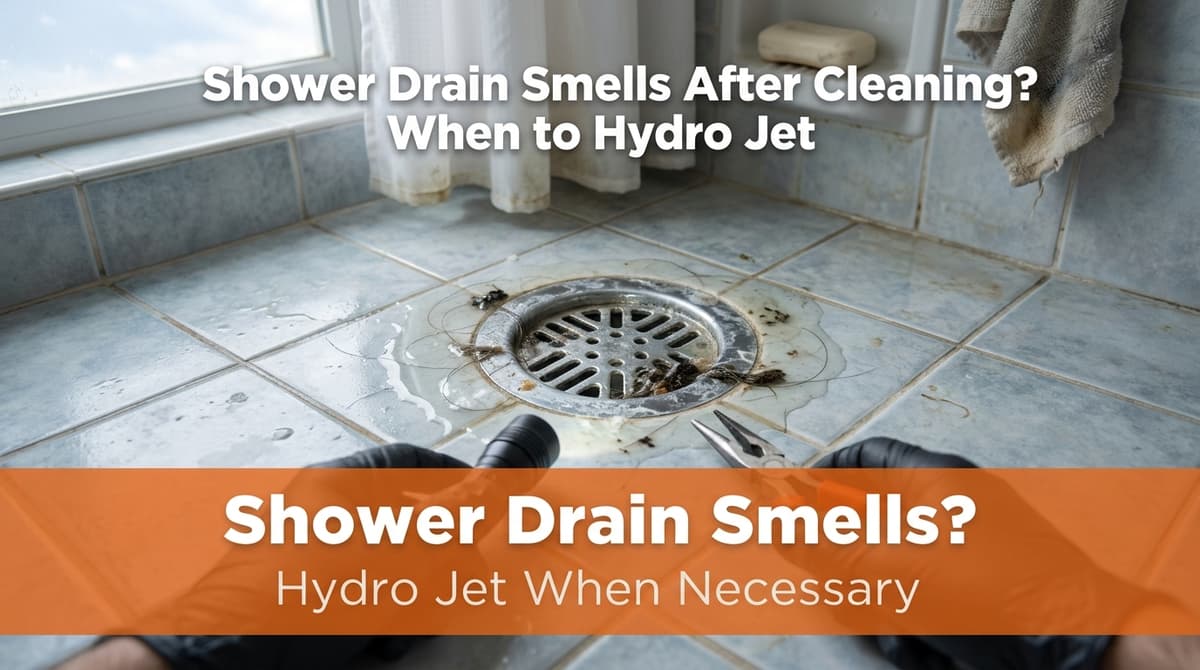
Why Your Shower Drain Still Smells After a “Good” Cleaning
We recently got a call from a customer — let’s call her Linda — with a problem we hear a lot. A plumber had already been out to her Henderson home and “cleaned the shower pipe about five feet down.” The water was draining, but her master shower still had that sour, sewer-like smell every time she walked into the bathroom.
Linda told us, “I think it needs to be cleaned all the way to the street… or whatever you guys can do to clean the pipe more than five feet.” She’d heard about something called jetter cleaning and wanted to know if that was the next step.
Her situation is a perfect example of why a basic drain cleaning isn’t always enough to get rid of stubborn odors — and when it’s time to talk about deep pipe cleaning or hydro jetting.
What a “Basic” Shower Drain Cleaning Usually Covers
When someone says their shower drain was cleaned “about five feet down,” it usually means a technician used a small hand snake or similar tool to break up a clog close to the drain opening. That can solve:
- Hair and soap buildup right under the shower drain cover
- Small obstructions in the trap (the U-shaped section of pipe)
- Slow draining or standing water in the shower pan
That kind of cleaning is great for immediate flow issues, but it has limits. It doesn’t scrub all the way down the line, and it doesn’t always remove the sticky layer of buildup along the pipe walls that can trap odor.
Why Your Shower Drain Can Still Smell After Cleaning
When Linda told us, “He cleaned it, but it still smells,” we mentally ran through the usual suspects we see in Las Vegas-area homes. There are a few common reasons a drain still stinks even after a basic cleaning:
1. Buildup Farther Down the Line
Shower lines can run a long way before they tie into the main sewer line. Hair, soap scum, skin oils, and hard water minerals can create thick, sticky deposits several feet away from the drain opening. A short hand snake might punch a hole through a partial clog, but it won’t scour those deposits off the pipe walls.
Think of it like poking a straw through a milkshake. You can get flow again, but the gunk is still coating the inside — and that’s where the smell comes from.
2. Biofilm and Bacteria
Over time, organic matter builds up and forms a slimy film inside the pipe (we call this biofilm). That slime is full of bacteria that produce foul-smelling gases. Unless that film is thoroughly washed away, the odor will return quickly, even if the water is draining better.
3. Issues With the P-Trap or Water Seal
Every shower should have a P-trap that holds water and blocks sewer gases from coming back into your home. Odors can sneak through if:
- The shower isn’t used often and the water in the trap evaporates
- There’s a crack or improper slope causing the trap to empty
- Negative pressure in the plumbing system is siphoning water out of the trap
In those cases, a basic cleaning won’t fix the root problem, because the issue is with the trap or venting, not just debris.
4. Problems Beyond the Shower Line
Sometimes the odor in a shower isn’t just from that one line. A partial blockage or heavy buildup in the main sewer line can push sewer gas up through the “weakest” drain in the house — often the lowest or least-used shower.
That’s when we start talking about deeper, more thorough options like hydro jetting, not just snaking five feet and hoping for the best.
What Is Hydro Jetting (Jetter Cleaning) and When Do You Need It?
On Linda’s call, our office talked about “jetter cleaning,” which is basically hydro jetting. Instead of a metal cable, we feed a special hose with high-pressure water nozzles into the drain line. The water pressure can scour the inside of the pipe walls, breaking up and flushing out:
- Heavy soap and hair buildup
- Grease and body oil deposits
- Stubborn biofilm and bacteria
- Small roots (in older homes with root intrusion)
We typically recommend hydro jetting when:
- Odors keep coming back after multiple basic cleanings
- You’ve had recurring clogs or slow drains in the same bathroom
- There are signs of buildup in multiple fixtures (showers, tubs, sinks)
- We suspect heavy buildup in the main line, not just at one drain
For Linda, our next step was to go over pricing options and, if needed, schedule a visit to inspect the master shower line and main drain before recommending hydro jetting. We always want to make sure the line is in good enough condition for high-pressure cleaning and that jetting is actually necessary.
Simple At-Home Checks Before You Call for Deep Cleaning
While odor issues often do need a professional fix, there are a few safe things you can check on your own before scheduling a deep cleaning:
- Run water in all drains: If a shower or tub goes unused, try running hot water for a minute or two to refill the trap and see if the smell improves.
- Clean the drain cover: Remove the shower strainer and clean off any visible hair and soap scum. Sometimes that surface gunk holds a lot of odor.
- Use a mild, non-corrosive cleaner: A mixture of hot water and a small amount of dish soap can help loosen surface grime. Avoid harsh chemical drain cleaners; they can damage pipes and rarely solve smell issues long term.
- Sniff test other fixtures: If multiple drains smell (sinks, tubs, laundry), the issue may be in the main line, not just one shower.
If you’ve tried those and the smell keeps returning, that’s usually your cue to bring in a pro to inspect deeper in the system.
How We Typically Approach a Smelly Shower Drain Call
Linda asked if we could just give her a price over the phone, and we were able to give a ballpark and set a time frame that worked around her work schedule. In situations like hers, our process usually looks like this:
- Talk through the history: Has it been cleaned before? How far? Is it just one drain or more than one?
- Inspect the shower and nearby fixtures: We check the trap, venting clues, and how quickly water drains.
- Choose the right tool: For light issues, a longer cable with the right head might be enough; for heavy buildup or recurring odor, we discuss hydro jetting.
- Test and verify: After cleaning, we run water, check for smells, and in some cases use a camera to confirm the line is clear.
Our goal is the same as yours: not just a drain that “sort of works,” but a bathroom that smells fresh and stays that way.
Preventing Shower Drain Odors Long Term
Once the line is properly cleaned, a few habits can help keep it that way:
- Use a hair catcher: A simple drain screen can dramatically reduce hair buildup in the line.
- Rinse with hot water weekly: After showering, run extra hot water for 30–60 seconds to help flush soap residue.
- Avoid heavy oils down the drain: Bath oils and oily products can stick to pipe walls and trap odors.
- Schedule maintenance cleanings: In homes with older plumbing or heavy use, a professional drain cleaning every 1–2 years can prevent both clogs and smells.
Quick FAQ: Smelly Shower Drains
“Do I always need hydro jetting if my shower smells?”
No. Sometimes the fix is as simple as clearing a local clog, refilling a dry trap, or addressing another plumbing issue. Hydro jetting is reserved for heavy buildup or recurring problems.
“Is hydro jetting safe for my pipes?”
When done by a trained technician who evaluates the condition of your pipes first, hydro jetting is generally safe and very effective. On fragile or damaged lines, we may recommend a different approach.
“Can I just use chemical drain cleaner?”
We don’t recommend it. Chemical cleaners can damage pipes, fixtures, and finishes, and they rarely remove deep biofilm or address trap and vent issues that cause odors.
If your shower smells even after it’s been “cleaned,” you’re not imagining things — it probably needs a deeper look. Whether it’s a simple fix at the trap or a full hydro jetting of the line, we’re here in the Las Vegas area to help you track down the real cause and get your bathroom smelling fresh again.