Why Your Shower Drain Smells & What Pro Cleaning Includes
Shower drain smells but isn’t clogged? Learn what causes those odors, how professional drain cleaning works, and simple steps to keep smells from coming back.
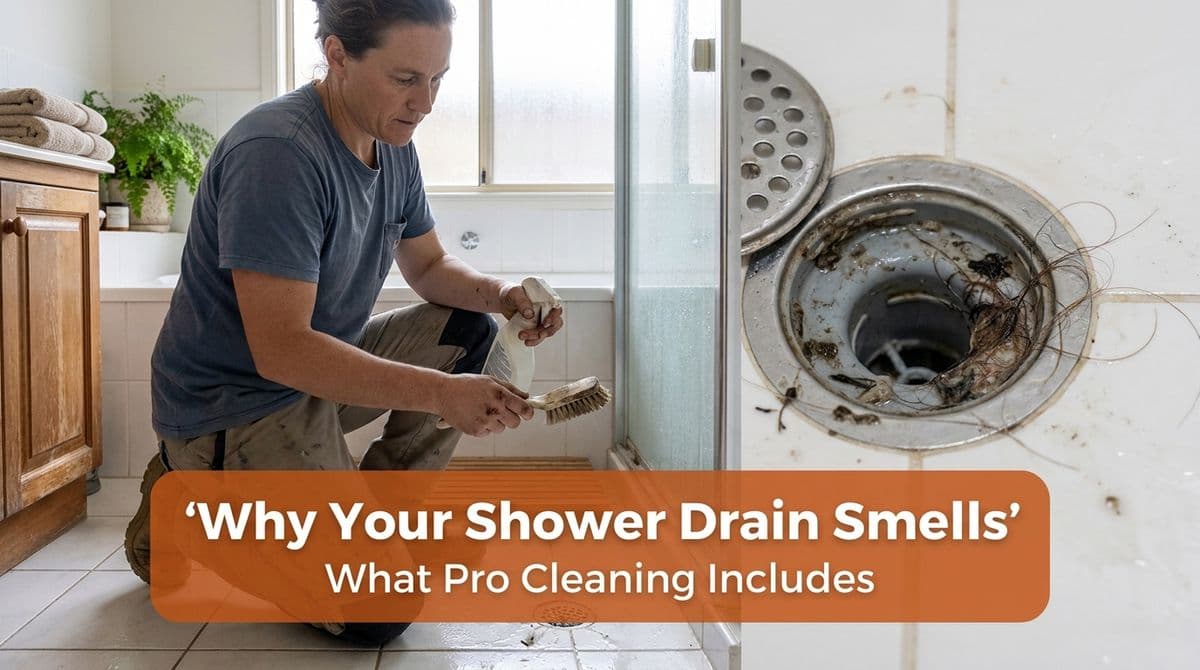
When Your Shower Drain Smells… But Isn’t Clogged
We recently got a call from a customer — let’s call him Mark — who had a problem a lot of homeowners deal with but don’t always talk about.
Mark told us he’d seen our ad about cleaning “stinky drains in showers and bathrooms.” His shower was draining just fine, but every time he turned on the water, a nasty odor crept up from the drain. As he put it, “It’s not clogged, but something’s probably built up in the pipes.”
He also asked a really common question about our drain cleaning special: what exactly does a professional cleaning include if the shower isn’t actually backed up?
Let me walk you through what we explained to Mark — and what we did at his home — because it can help you understand why your shower drain smells bad even when it’s not clogged, and what a proper professional cleaning should look like.
Why a Shower Drain Can Smell Without Being Clogged
When we hear “stinky shower, no clog,” there are a few usual suspects we look for. In Mark’s case, it ended up being a combination of two of these:
1. Biofilm Buildup (Soap Scum + Body Oils + Hair)
Every time you shower, a little mix of soap, shampoo, body oils, skin cells, and hair goes down the drain. Over time, that “gunk” coats the inside of your drain line and forms a slimy layer called biofilm.
Even if water is still flowing, that biofilm can:
- Trap bacteria that produce foul odors
- Hold onto hair and debris, slowly narrowing the pipe
- Release a musty, sometimes rotten-egg smell when hot water hits it
In Mark’s shower, we pulled the drain cover and could see the telltale dark, slimy ring just below the surface — a classic sign of smelly biofilm.
2. A Dry or Failing P-Trap
Under every shower drain, there should be a P-shaped section of pipe called a P-trap. Its job is simple: it holds water to create a seal that blocks sewer gases from coming back up.
If that trap dries out or doesn’t hold water properly, you might notice:
- A strong sewer or “rotten egg” smell when you first walk into the bathroom
- Odors that get worse after someone else in the house uses water elsewhere
- The smell coming and going depending on humidity or temperature
With Mark, we checked the trap by removing the drain cover and running water to confirm the trap was filling and holding water. His trap was fine, but this is something we always rule out.
3. Venting Problems and Sewer Gas
Your plumbing system relies on vents (usually through the roof) to equalize air pressure and safely vent sewer gases. If those vents are blocked or improperly installed, negative pressure can pull the water out of the trap and allow odors in.
Homeowners typically can’t see or easily diagnose vent issues themselves, but signs include:
- Gurgling sounds when water drains
- Multiple fixtures smelling bad at the same time
- Odors that appear after heavy rain or strong winds
With Mark’s home, the odor was isolated to the shower, which pointed us more toward buildup inside that specific drain rather than a whole-house vent issue.
What Our Professional Shower Drain Cleaning Includes
On the phone, Mark’s big question was about our special: “It’s not clogged — is pipe cleaning still included?” The short answer is yes — as long as we can access the line and it’s within the scope of that fixture, we’re focused on cleaning, not just punching a hole in a clog.
Here’s what a typical professional shower drain cleaning looks like when we come out for an odor issue like his:
1. Inspection and Testing
First, we take a few minutes to simply look, smell, and test:
- Remove the drain cover and visually inspect for hair, soap scum, and visible buildup
- Run hot and cold water to see how fast it drains and whether odor intensifies
- Check that the P-trap is present and holding water
- Ask questions about when the smell started and whether it shows up in other drains
With Mark, we confirmed the drain wasn’t technically “clogged,” but the flow was a bit slower than ideal and the smell got stronger with hot water — a big hint that biofilm was our culprit.
2. Mechanical Cleaning (Not Just Chemicals)
Instead of dumping harsh chemicals down your drain (which can damage pipes over time), we use mechanical and professional-grade cleaning methods, such as:
- Drain snaking/augering: To break up and pull out hair and heavy buildup near the trap
- Manual scrubbing: Cleaning the accessible part of the drain and tailpiece to remove slime
- Targeted cleaning solutions: Safe, plumbing-friendly products that dissolve biofilm and deodorize
In Mark’s case, we removed a surprising amount of hair and a thick ring of soap scum that wasn’t enough to stop the water, but absolutely enough to cause that odor.
3. Flushing and Final Checks
Once the line is cleaned, we don’t just pack up and leave. We:
- Run the shower on hot for several minutes to flush loosened debris
- Confirm the trap is full and the smell has cleared
- Check nearby fixtures to make sure there are no related issues
Before we left Mark’s house, we had him step into the bathroom and run the shower himself. No smell. That’s the moment we always look for.
How to Keep Shower Drain Odors from Coming Back
After we finish a job like this, we always share a few tips so homeowners can keep things fresh longer. Here’s what we told Mark:
- Use a hair catcher: A simple drain screen can drastically reduce buildup.
- Rinse with hot water: Once or twice a week, run very hot water for a few minutes after showers.
- Avoid harsh chemical cleaners: They can damage older pipes and don’t remove all the sludge.
- Run rarely used showers monthly: Turn them on for a few minutes to keep that P-trap from drying out.
If odors return quickly after cleaning, that can be a sign of a deeper issue like venting problems or a damaged trap, and it’s worth having a licensed plumber take a closer look.
When to Call a Professional
Some mild odors can be helped with basic at-home cleaning and a hair catcher, but consider calling in a pro if:
- The smell is strong and persistent, even after cleaning the drain cover area
- Multiple drains in the home smell at the same time
- You hear frequent gurgling or see water backing up between fixtures
- The shower has been unused for a while and running water doesn’t solve the smell
If your shower smells like Mark’s did — even though it’s not clogged — a focused, professional drain cleaning can make a huge difference and help you breathe easier in your bathroom again.